The three guides that topped Google for this search on November 23, 2026 describe what the studio does at each stage. This one is written from your side of the camera. At each stage you will see what happens, what you decide or approve, and what you should have in hand before the next stage starts.
Ruah Creative House is a purpose-driven creative studio at 30 Union St. Suite 7 in Elizabeth, New Jersey. We film and edit for values-driven people and organizations, from nonprofits and coaches to churches. The stages below apply whichever studio you hire.
Three Stages, or Five?
Ask how many stages video production has and you will get several answers. When we read the first page of Google for “stages of video production” in the United States on November 23, 2026, the guides there counted:
3 stages
Space Pepper; One Productions (both in the title)
4 stages
Genesis Films (in the title); Luminous Studios (four steps in the article)
5 stages
Pocket Creatives; OBSBOT (both in the title); Team Asia (five steps in the article)
7 stages
Sound and Vision Media (in the title)
They describe the same work, cut at different places. Wikipedia and Lone Star College name three core phases: pre-production, production and post-production. The longer lists we read split out the strategy before the plan, the casting, or the publishing after the edit.
We use five, because two of them are where a client's decisions matter most: the brief at the start, and the files and where they go at the end.
Stage 1: Development, the brief
What happens
- You and the studio agree why the video exists: who it is for, what they should do after watching, and where it will play.
- The one story or message is chosen, and everything else is left for another video.
- Lone Star College's multimedia team starts with a fact-finding meeting about the purpose, strategy and goals, and about branding, audience and tone.
Your part
- Name one goal and one audience.
- List every place the video will be shown: your website, YouTube, Instagram, an event screen, an email.
- Choose one person on your side who makes the final call.
You leave this stage with: A short written brief both sides agree on.
Stage 2: Pre-production, the plan
What happens
- The script, outline or interview questions are written and approved.
- Shots are planned, sometimes as a storyboard, and the shoot is scheduled.
- People, places and equipment are confirmed. Wikipedia's list for this phase: script, storyboards, budget and shooting schedule, casting, location scouting, crew and equipment.
Your part
- Approve the script or questions before the shoot, not after it.
- Confirm who will be on camera and get their written permission to film.
- Book the location, with the written permission of whoever runs it.
You leave this stage with: An approved script or question list, a schedule and, on bigger shoots, a call sheet.
What Is Pre-Production? A Checklist
Pre-production is everything decided before a camera records. Wikipedia describes it as the phase in which the project is defined before any footage is recorded, and says thorough pre-production is generally considered essential to keeping a production on schedule and within budget. On a large shoot it ends with a call sheet: the day's schedule, sent to cast and crew, usually no later than 12 hours before the next work day, with where and when to report.
Here are ten things for a client to settle before the shoot day:
- One goal and one audience, written down.
- Every place the video will play, with the shape each one needs: wide for YouTube and your website, vertical for Reels and Shorts.
- The person on your side who gives final approval.
- A script, an outline or a list of interview questions, approved.
- Who will be on camera, and a signed release from each of them.
- The location, the date and the time, confirmed with whoever runs the space.
- A shot list: the moments, places and details the edit cannot do without.
- Anything that must appear on screen: a logo, a name and title, a website, a scripture reference.
- Music: where it comes from, and the license that covers it.
- The number of rounds of changes, the delivery date and who owns the files, in writing.
A studio should ask you about most of these on its own. If one does not come up, raise it yourself.
Stage 3: Production, the shoot
What happens
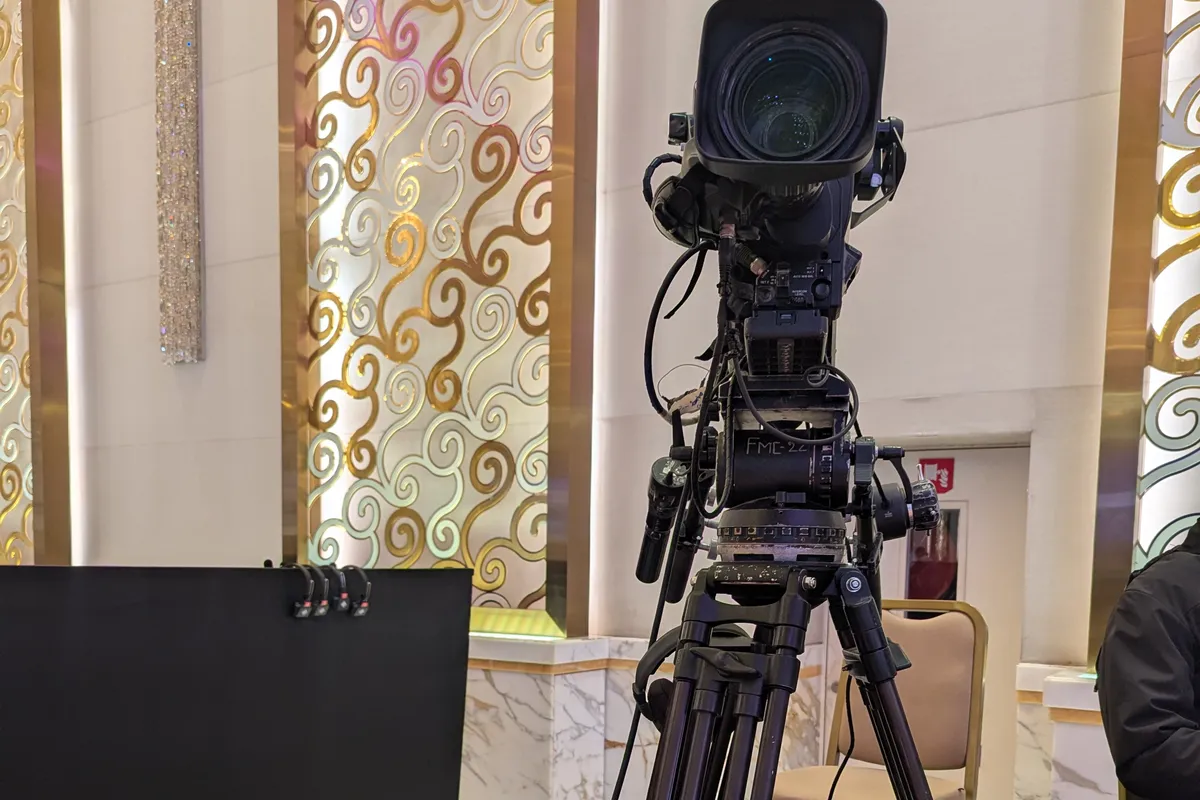
- The crew sets up lights, sound and cameras.
- Interviews and scenes are recorded, along with b-roll: the supporting footage cut in over the talking.
- Voiceovers are recorded if the video needs one.
Your part
- Have your point person on location. Lone Star College's team recommends it, especially when an outside crew films for you.
- Say now if there is a shot you must have. The same team asks clients to raise any specific vision before the production phase ends.
You leave this stage with: All the raw footage and sound the edit will need.
Stage 4: Post-production, the edit
What happens
- The footage is organized and reviewed; Lone Star College's producer also transcribes every interview.
- The story is assembled and cut. When the cut is settled, the edit is said to be locked, in Wikipedia's words.
- Once the cut is locked, color and sound are finished; music, titles and captions are added as well.
Your part
- Watch the first cut with every person who must approve it, and send one combined set of notes.
- Know how many rounds of changes are included before the edit begins.
You leave this stage with: An approved final cut.
Stage 5: Delivery, the files and where they go
What happens
- The final cut is exported in the format each platform needs. Lone Star College's team notes that YouTube, Facebook and other platforms have slightly different specifications, and says to discuss them during pre-production.
- Short versions are cut for social feeds if they were part of the plan.
- Captions and thumbnail frames are handed over with the video when they were agreed.
Your part
- Check every version on the device your audience will use, usually a phone.
- Agree who owns the finished files and whether you can get the project files later.
- Publish, then watch what viewers do next: calls, sign-ups, messages.
You leave this stage with: Finished files you own, in every version you agreed.
How Long Each Stage Takes
No single number fits every project. The three sources we read set very different scales:
Lone Star College, Multimedia Services
Plan for post-production to take approximately 6 to 8 weeks, unless another timeline has been discussed. It adds that every production company has different timelines.
Ruah Creative House
Most video edits come back in 3 to 5 days, and sermon reels in 1 to 2 days. The timing for a project is confirmed on the first call.
Wikipedia, on feature films
Post-production takes from six months for a small film to over a year for a film heavy with visual effects.
Three things you control can stretch any of them: how much is filmed, how many people approve the cut, and how many versions you need. Ask the studio for the date of the first cut in writing; our video editing page puts that question on its list of 8 to ask any editor.
When Stages Overlap
The stages run in order, but not always one at a time. Wikipedia notes that digital workflows often let them overlap, with editors cutting footage while shooting is still under way.
It works the other way too. On a project that films every week, such as a sermon series or a podcast, one episode can be in the edit while the next is being planned. The order inside each episode stays the same: brief, plan, shoot, edit, deliver.
Where Projects Go Wrong, and the Stage That Prevents It
- 1
Two goals in one video.
Development. Pick one goal and one audience; the second message becomes a second video.
- 2
The script is rewritten after the shoot.
Pre-production. Approve words before anyone is filmed saying them.
- 3
A must-have shot is missing.
Production. Name it before the crew packs up; after that, getting it may take another shoot.
- 4
A new reviewer appears at the final cut.
Post-production. Every approver watches the first cut, so notes arrive once.
- 5
The video is too wide for Instagram.
Pre-production. Lone Star College's team says to discuss each platform's specifications there, so the shoot leaves room for every crop.
- 6
Nobody agreed how many changes, by when, or who owns the files.
Before the work starts. Our video editing page lists these, left vague, among its signs to keep looking.
Four of the six are settled before anyone presses record. That is why the first two stages deserve more of your time than the shoot.
How Ruah Runs the Five Stages
Our video production company page lists five steps. Here is where each one sits:
- Development: a free call with Eric. You tell Eric Muñoz Jr., our founder, who you serve, what you want people to do after they watch, and where the video will play.
- Pre-production: message first. We settle the 1 story worth telling and plan the shoot around it. If your message is not clear yet, we start with Strategy.
- Production: filming. Our crew films on site, or you come to our studio at Suite 7, which is set up for 2 people on camera. For 3 or more, we book a bigger room in the same building.
- Post-production: the edit. Clean sound, color, music and captions. You see the edit and tell us what to change; for a single project, we agree the rounds of changes on the call.
- Delivery: clips and approval. We can cut short versions for each place the video will go. Nothing is shared until you have said yes.
Already filmed? Our video editing services start at post-production, with footage from one camera, several cameras or a phone. Planning a story film about your mission? Our brand video guide walks through the brief in detail.
Sources
The figures and descriptions above come from these pages, read on November 23, 2026. The Ruah details come from our own video production company and video editing pages.
- Lone Star College, Multimedia Services: Video Production ProcessThree phases: pre-production, production and post-production. Fact-finding and pre-production meetings, an optional site visit, and shoot preparation (scripts reviewed and approved, interview questions discussed, schedule finalized, locations confirmed). A point person on location; raise specific visions before production ends. Interviews transcribed in post-production; plan about 6 to 8 weeks for it unless another timeline was discussed; there may be a set number of revisions; platform specifications discussed in pre-production.
- Wikipedia: Video production (last edited November 6, 2026)Pre-production is the planning phase before any footage is recorded: script, storyboards, budget and shooting schedule, casting, locations, crew and equipment. Production is the recording phase. Post-production organizes, edits and refines the material, then exports it. The stages are sequential, but digital workflows often let them overlap.
- Wikipedia: Post-productionOnce the picture editing is settled, the edit is said to be locked, and color finishing and sound work follow. Post-production on a film takes from six months for a small film to over a year with heavy visual effects.
- Wikipedia: Daily call sheetThe day's schedule for a shoot, issued to cast and crew, usually no later than 12 hours before the next work day: where and when to report, contacts, the scenes being shot, the location address and parking.
- Pocket Creatives: What Are The 5 Stages of Video ProductionStrategy and development, pre-production, production, post-production, distribution and video marketing. First result on Google for the search, November 23, 2026.
- Luminous Studios: What Is the Video Production Process and Why Is It Important?Pre-production, production, post-production and distribution. Second result.
- Team Asia: What are the Stages of Video Production? The Winning GuideFive steps: conceptualization, bidding and casting, pre-production, production day and post-production, with offline and online cuts. Third result.
Frequently Asked Questions
What are the 5 stages of video production?
Development (the brief), pre-production (the plan), production (the shoot), post-production (the edit) and delivery (the finished files and where they go). Wikipedia and Lone Star College's multimedia team both describe three core phases, pre-production, production and post-production. Many studios split the planning before and the publishing after into stages of their own, which makes five.
What is pre-production?
It is the planning phase before anything is recorded. Wikipedia lists what it typically covers: writing the script, creating storyboards, developing a budget and shooting schedule, casting performers, scouting locations, and assembling the crew and equipment.
How long does each stage of video production take?
It depends on the size of the project, and the sources we read give very different figures. Lone Star College's multimedia team tells the people it films for to plan about 6 to 8 weeks for post-production unless another timeline was agreed. Ruah Creative House returns most video edits in 3 to 5 days. For feature films, Wikipedia puts post-production at six months for a small film to over a year for one with heavy visual effects.
What happens in post-production?
The footage is organized and reviewed, interviews may be transcribed, and the story is assembled and edited. Then the picture is refined with color correction, sound mixing, music, titles and any effects, and the finished video is exported for each place it will play. You review a cut and ask for changes along the way.
Can the stages of video production overlap?
Yes. Wikipedia notes that while the stages are sequential, modern digital workflows often let them overlap; an editor may start cutting footage while shooting is still going on.
What should I prepare before a video shoot?
Settle the goal, the audience and where the video will play first. Before Lone Star College's team arrives to film, it makes sure scripts are reviewed and approved, interview questions discussed, the schedule finalized and locations confirmed, and it recommends that your main point person be on location on the day.
Ruah Creative House is a purpose-driven creative studio at 30 Union St. Suite 7 in Elizabeth, New Jersey. Eric Muñoz Jr., our founder, was born and raised in Elizabeth, still lives here, and has served the city for years through its schools, nonprofits, churches, and Chamber of Commerce.
See who we film for and how a project runs on our video production company page.