A request for a brand video often begins with a familiar frustration. People visit the website, read a few lines, and leave without reaching out. The page explains what you do, but it doesn't yet show why it matters.
This guide is for whoever has to turn that frustration into a finished film: the director of a nonprofit, a coach, a speaker, or the owner of a business built around a purpose. It starts with planning, because a brief, a list of questions and a shot list can do more for the final film than any camera.
Ruah Creative House is a purpose-driven creative studio at 30 Union St. Suite 7 in Elizabeth, New Jersey. Our crew films on site, or you record with us in the studio. Then we edit the story into films and clips. The planning tools below work whether you hire us or not.
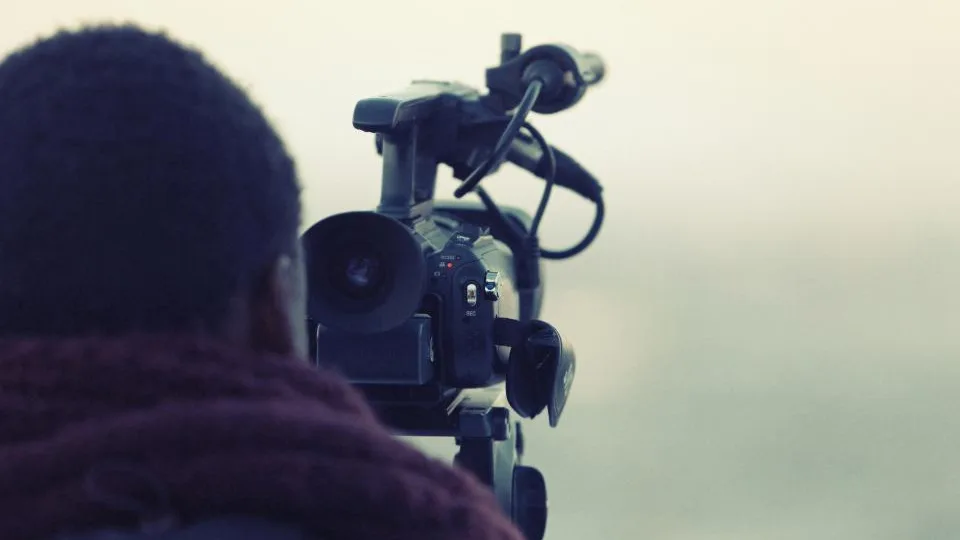
What Is a Brand Video?
Put simply, a brand video is a film whose subject is your organization rather than something it sells. It shows the reason the work exists, the people it is for, and what it feels like to work with you.
To tell what you are making, picture someone at the last frame. If you want them to buy, register or donate before a deadline, you are making an ad, and it will date quickly. If you want them to remember you and reach out when the need is real, you are making a brand video, and it can stay on your home page for years.
For a nonprofit, a coaching practice or a mission-driven business, aim for four things:
- Describe the people you serve in the words they use for themselves.
- Film the work happening, so viewers see it instead of hearing about it.
- Let someone outside your organization say what changed for them.
- Close on a single next step, such as booking a call, giving or volunteering.
The Numbers Behind It
Wyzowl has surveyed marketers and consumers about video every year since 2015. Its 2026 report asked 266 people in late 2025. These findings bear on a brand video:
- 91% of businesses use video for marketing.
- 93% of video marketers say video has increased brand awareness.
- 89% of consumers say video quality affects how much they trust a brand.
- 63% of consumers would most like to learn about a product or service by watching a short video. Only 12% would rather read an article.
- 85% of people say a video has convinced them to buy a product or service.
The quality figure is the one to keep in mind. A brand video exists to earn trust, and a rough one can cost you some. Quality here doesn't mean expensive. It means clear sound, steady pictures and a story that holds together.
Plan It on One Page
Before anyone books a crew, answer these seven questions on a single page and share it with everyone who has a say:
- Who is this video for? Name one real person you want to reach.
- What is the one thing they should know after watching?
- What should they do next: book a call, give, volunteer, sign up or visit?
- Where will it play first: your home page, YouTube, an event or an email?
- Who will be on camera, and who has already said yes?
- Is there a date it must be ready for, such as a launch, a gala or a talk?
- Who approves the final cut?
The brief settles arguments before they cost money. When someone later asks to add a message or a person, the page answers whether it belongs.

Find the One Story
Fill in this sentence before the shoot: “After watching, I want ___ to believe ___ and to ___.” If the blanks are hard to fill, the message needs work before the camera does.
It is tempting to say five things at once. Choose the one a doubtful first-time visitor most needs to believe, and let your website carry the rest. Aim for one clear belief, shown through one real person.
Six Story Types for Purpose-Driven Organizations
Each type below answers a different doubt that visitors bring with them. Find the doubt that most often keeps people from reaching out, and make that type first. Others can come from later shoots, or from the same day if you plan for them.
- 1
The front-door film
The doubt it answers: Who are you, who is this for, and what is it like to work with you?
Where it plays: The top of your home page and about page, and the link in your email signature.
Make it first if most people meet you online before they meet you in person.
- 2
The founder's reason
The doubt it answers: Why does this person do this work, and why should I believe them?
Where it plays: Your about page, your speaker page, and the opening of a talk or workshop.
Make it first if people book you by name.
- 3
One life, before and after
The doubt it answers: Does this actually help someone like me?
Where it plays: Service pages, proposals, donor and partner emails, and short clips.
Make it first if people agree with your message but doubt the result.
- 4
A day in the work
The doubt it answers: What really happens when I sign up, show up or give?
Where it plays: Service pages and social media, cut into short pieces.
Make it first if your work is hard to picture from a description.
- 5
The people beside you
The doubt it answers: Who would I be working with, and would I fit in?
Where it plays: Careers and volunteer pages, and recruiting posts.
Make it first if finding staff or volunteers is what slows you down.
- 6
The milestone film
The doubt it answers: Where did this start, and where is it heading?
Where it plays: Anniversaries, galas, annual meetings and launches, then your about page.
Make it first when a date is coming: an anniversary, a new space or a campaign.
Stories from people you have served are a common choice: 57% of video marketers in Wyzowl's 2026 survey make testimonial videos. Our testimonial video production page shows how we film those conversations.
8 Interview Questions for a Brand Video
Ask these off camera, and invite people to answer in full sentences that include the question. “I started this work because…” can stand alone in the edit. “Because my mom…” can't.
- Who do you serve, and what was their life like before they found you?
- What made you start this work, or join it?
- Tell me about one person whose story stays with you.
- What do people misunderstand about what you do?
- What would be missing in this city if you stopped tomorrow?
- What does a good day here look like?
- What do you hope someone does after watching this?
- Is there anything we didn't ask that you want to say?
Leave room for the last question. People sometimes say the most honest thing once they think the formal part is over.
Skip the script. Reading lines aloud is a skill of its own, and nerves show on camera. Talking about their own work is something people do every day.
What to Film Besides the Interviews
The interviews carry the story. These shots give viewers something to look at while it is told, so bring the list to the shoot:
- The outside of your building or the place the work happens, at a good time of day.
- Hands doing the work: a coach's notebook, a volunteer packing boxes, a speaker's notes.
- The people you serve, only with their written permission.
- Your team arriving, talking and working together.
- One detail no other organization has, such as a wall of photos, a sign or a tool.
- The neighborhood around you, if place is part of your story.
- Each person on camera, quiet and not talking, for a few seconds.
- Anything the interviews mention that viewers will want to see.
On Site or in a Studio?
Let the story decide where you film.
On site
When the place itself belongs in the story, the work only happens there, or you want many people in the frame.
In a studio
When the story is one person talking, such as a coach, speaker or founder, or when your building is noisy or has no quiet room.
Both
When you want a calm, well-lit interview and real footage of the work. Record the conversation in the studio, then film the work where it happens.
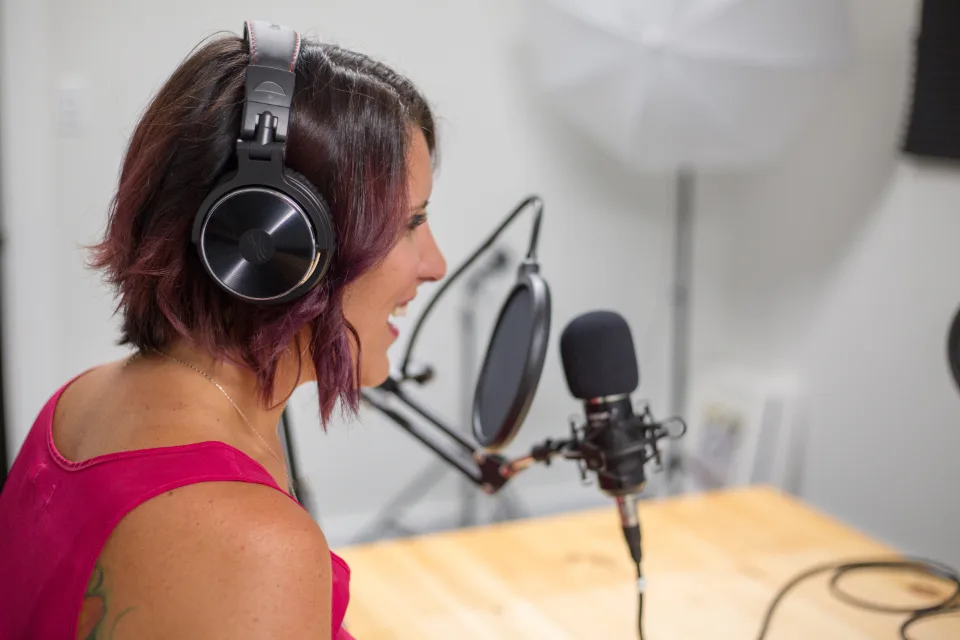
Our studio at Suite 7 on Union St. in Elizabeth is set up for 2 people on camera, and clients already record with us there. For 3 or more people, we book a bigger room in the same building. Our crew also films on site.
For Everyone Being Filmed
Send this to everyone who will be filmed, a few days before:
- Wear solid colors. Thin stripes and small checks can shimmer on camera.
- Skip logos you don't want in the video, and bring a second top.
- Leave noisy jewelry at home. A clip-on microphone picks up every jingle.
- Don't memorize anything. You'll be asked questions, so answer them as you would over coffee.
- Look at the person asking, not into the lens, unless you're told otherwise.
- Bring water, and plan to stay a little longer than you think.
Shoot Day, Edit and Approval
Schedule the conversations early in the day, then film the work they describe. Give every speaker their own microphone and listen back before moving on. Muffled or echoing sound is hard to fix later.
In the edit, the interviews are arranged into a story first. The footage is then laid over them to show what each person describes. You review a draft and send notes, and the finishing work follows: sound mix, color, music and captions. At Ruah, most video edits come back in 3 to 5 days.
Ask for every format you will need before the shoot: a full-length film for your website, a version under a minute, and upright clips for phones. Planning them early means the crew films with each one in mind.
Show the final cut to everyone who appears in it before it goes public. Get written permission from each person you film, and from a parent or guardian for anyone under 18. Ruah shares nothing until you have said yes.
How Long Should a Brand Video Be?
Wyzowl's 2026 survey asked video marketers which length works best. 51% chose 30 to 60 seconds and 20% chose 1 to 2 minutes; only 4% chose 3 minutes or more.
Wistia's 2026 State of Video Report looked at over 13 million videos. Videos under a minute averaged a 52% engagement rate, meaning viewers typically watched about half. Match the length to the screen and the setting:
Home page
Aim for about a minute: room for the work and one person's story, and little more.
Social media
One idea per clip, well under a minute, with captions.
About page or speaker page
A few minutes can work, because these visitors chose to learn more.
Events and launch days
A seated audience is more likely to stay with a longer film if every minute moves the story forward.
When a draft feels long, find the stretch where nothing new happens and take it out.
Brand Video, Ad, Explainer or Testimonial?
These four formats get confused, and the confusion can show up as one film trying to do two jobs. What each one is about:
Brand video
About the organization itself: why it exists, the people it is for and how it works. No offer and no deadline.
Commercial or ad
About an action you want now, often tied to an offer or a date. It runs for a campaign and then retires.
Explainer
About how something works, step by step. It answers “how”; a brand video answers “who” and “why.”
Testimonial
About one person's experience, in their own words. It can stand alone or become the heart of a brand video.
Plan for it, and a single shoot day can supply a brand video, a testimonial and a set of short clips.
Where the Finished Film Should Live
Publishing is where a brand video starts working. Put it in the places people make up their minds about you:
- Near the top of your home page, and on your about page.
- On YouTube, with a plain title and description that say who you serve and where.
- As a short clip on your Google Business Profile, so people who find you on the map can see you.
- In welcome emails, proposals and follow-ups to donors, partners and clients.
- On screen before you speak at events and workshops, as your introduction.
- On social media as captioned clips, released over several weeks.
Upload to YouTube even if you embed the video somewhere else. Pew Research Center's 2026 survey of 5,511 adults found that 84% of U.S. adults use YouTube.
7 Brand Video Mistakes to Avoid
- Booking the camera before agreeing on the message.
- Packing every strength into one film.
- Giving people lines to read.
- Leaving sound until the end.
- Delivering one long film and no short clips.
- Ending without a clear next step.
- Posting it once and never using it again.
What Shapes the Budget
What you pay depends on the work involved. These are the parts that move the number:
- How many days of filming, in how many places.
- How many people you interview or film.
- Studio, on site, or both.
- How long the main film runs, and how many versions and clips you want.
- Music, titles and graphics.
- How much story planning comes before the shoot.
Our plans and prices are on the pricing page. We work out the right fit for your project on a free call first.
When to Hold Off
A brand video is a long-term investment in trust, and some moments call for something else. Hold off if:
- You can't yet say in one sentence what you do and for whom.
- Your website has no clear way to call, book or sign up. Fix that first.
- Your name, offer or leadership is about to change.
- You need inquiries this week. An ad or a direct offer will move faster.
Where Ruah Fits
You know your work and the people you serve. We bring the planning, the crew, the studio and the edit:
- Brand and story films. Our video production company in Elizabeth, NJ plans, films and edits documentary-style films about why your work matters.
- Stories from the people you serve. Testimonial video production records a conversation, with follow-up questions the whole time, and edits it into a story and short clips.
- A show of your own. Video podcast production records your show in our studio or on site, then edits the episode and the clips.
- Footage you already have. Video editing services shape it into a finished video and short clips.
- Leading a church? Church video production covers sermon reels, full sermon edits, and testimony and baptism films.
We don't film weddings, run live streams or set up AV systems. If that's what you need, we'd rather point you in the right direction.
Sources
The numbers above come from these pages, read on November 21, 2026.
- Wyzowl: Video Marketing Statistics 2026 (State of Video Marketing 2026)Survey of 266 respondents, marketers and consumers, in late 2025. 91% of businesses use video for marketing; 93% of video marketers say video increased brand awareness; 89% of consumers say video quality affects their trust in a brand; 63% would most like to learn about a product or service from a short video (12% from an article); 85% have been convinced to buy by a video; 57% of video marketers make testimonial videos; 51% of video marketers name 30 to 60 seconds and 20% name 1 to 2 minutes as the most effective length.
- Pew Research Center: Americans’ Use of Social Media in 2026 (Social Media Fact Sheet)84% of U.S. adults use YouTube. Survey of 5,511 U.S. adults conducted Jan. 30 to June 18, 2026.
- Wistia: How to Choose the Right Marketing Video Length for Any Goal“Videos under a minute average a 52% engagement rate. That means viewers typically watch half of the video’s total length.” From Wistia’s 2026 State of Video Report, which analyzed over 13 million videos uploaded to Wistia.
Frequently Asked Questions
What is a brand video?
It is a short film about an organization itself: why it exists, who it is for and how it works. Unlike an ad, it carries no offer or deadline, so it can stay on your website for years.
Brand video or commercial: which do we need?
If you need people to act on an offer soon, make a commercial. If you need people to understand and trust your organization before they ever contact you, make a brand video. Some organizations need both, at different times.
What length works best for a brand video?
In Wyzowl's 2026 survey, 71% of video marketers said 30 seconds to 2 minutes works best. Keep the home page version in that range, give a longer story film to events or your about page, and cut short clips from the same footage.
Is a brand story video something different?
A brand story video tells how and why your organization began, usually through its founder or through someone it has served. It is one kind of brand video, and it depends on a true story told in the speaker's own words.
What does a brand video cost?
The price follows the work: days of filming, the number of places and people, studio or on site, and how many versions and clips you need edited. Ruah's plans and prices are on our pricing page, and a free call with Eric settles what your project needs.
Can we film a brand video on our own?
For quick social clips, a phone and a window with soft daylight can be enough. For the film on your home page, three things are hard without help: clean sound, an interview that sounds natural, and an edit that shapes the footage into a story.
Ruah Creative House is a purpose-driven creative studio at 30 Union St. Suite 7 in Elizabeth, New Jersey. Eric Muñoz Jr., our founder, was born and raised in Elizabeth, still lives here, and has served the city for years through its schools, nonprofits, churches, and Chamber of Commerce.
See who we film for and how a project runs on our video production company page.