The people who book you often have not seen you speak before they decide. Your video has to stand in for that first meeting. At an NSA Illinois program, a bureau owner put it plainly: a weak video does real damage, because it is often all a decision maker has to go on.
This guide is for speakers and coaches who want that evidence to be strong. Its figures and advice draw on 12 published pages, 7 of them from speakers bureaus, their trade association and a booking platform; the other 5 come from a speakers' association chapter, an events industry publication and three sites that advise speakers. All 12 are listed under Sources, and where they disagree, we say so.
Ruah Creative House is a purpose-driven creative studio at 30 Union St. Suite 7 in Elizabeth, New Jersey. Our crew films on site, and talks and keynotes are on the list of footage we edit. The steps below work whether you hire us or not.

What Is a Speaker Reel?
A speaker reel is an edited video, a few minutes long, of you speaking to audiences. It lets an event planner, a bureau agent or a conference committee judge your style, your topic and how a room responds to you, in a few minutes. People also call it a sizzle reel or a demo reel.
It is not a walk-on video. A walk-on plays in the room just before you speak, to people who are already there. A reel comes earlier, and its job is to win the booking.
It is not a brand film about your life either. Interviews and testimonials can appear in small doses, but most of the reel should be you on a stage. eSpeakers, a speaker booking platform, says a mixed video works when at least 60% of it is on-stage footage.
The Two Videos Bureaus Ask For
The International Association of Speakers Bureaus says bureaus prefer a speaker to have two videos:
The reel
2 to 3 minutes of high-quality highlights of you presenting to an audience. It may also include testimonials from audience members.
The demo
A longer video, 10 minutes or more, of you giving one presentation to an audience.
Bureaus differ on how much editing the demo may carry. The Baltimore Worldwide Speakers Bureau requires 5 to 10 minutes of a talk to a live paid audience from the past year, unedited, without voiceovers, music or transition pages. It also accepts a professionally produced reel of 2 to 10 minutes as a second or third link.
Record every talk in full, and both videos can come from the same footage.
How Long Should a Speaker Reel Be?
There is no single rule. Here is what five of the sources we read say:
International Association of Speakers Bureaus
2 to 3 minutes for the reel; 10 minutes or more for the demo.
BigSpeak, a speakers bureau
2 to 3 minutes. Under that, something is missing; over it, attention drifts.
eSpeakers, a speaker booking platform
90 seconds to 2 minutes for the main reel; 3 to 5 minutes for a longer version a bureau or client asks for.
A bureau owner and a corporate planner, at an NSA Illinois program
About 3 minutes for the first look, plus a keynote excerpt of about 20 minutes.
Premiere Speakers Bureau's CEO, interviewed by The Speaker Lab
3 to 5 minutes, if you have only one video.
Our reading of them: cut the reel to 2 to 3 minutes, and keep a long stretch of one talk ready to send.
The reason is how a reel gets watched. SPEAKING.com says most event planners watch only the opening minutes of a demo video, and eSpeakers says buyers watch only the first 2 to 3 minutes of a clip. Whatever comes after that may never be seen, so your strongest stage moment goes first.
What a Planner Checks First
The Speaker Lab's write-up of its interview with Premiere Speakers Bureau's CEO notes that planners often look at several speakers, with little time for long videos. These are the checks the sources point to, so answer each one on screen:
- 1
Was this a real event?
A column in BizBash, an events industry publication, tells planners the quickest check is a company or association name on the stage, on a podium or a backdrop.
- 2
Can I watch a stretch, not just soundbites?
The same BizBash column advises planners to view unedited clips of at least a couple of minutes. SPEAKING.com, a speakers bureau, asks speakers for at least 2 consecutive minutes in front of an audience.
- 3
Who is the speaker talking to?
eSpeakers prefers camera angles that include some of the audience over a shot of the stage that never shows the room.
- 4
Can I hear every word?
eSpeakers warns that a camera at the back of the room, using its own microphone, sounds distant and hollow.
- 5
Is it recent?
The Baltimore Worldwide Speakers Bureau only accepts a demo of a talk given in the past year.
The BizBash column also warns planners that some production companies stage events, renting a hall and filling it with a fake audience, to film reels. Every clip in your reel should come from a real talk.
Cut It in This Order
Give the editor this order, and the reel answers a planner's questions in the sequence they come up:
- 1
Open on stage
eSpeakers says your main clip should begin with you speaking on stage, because that is what the buyer is interested in seeing. BigSpeak suggests opening with a well-known person introducing you instead. If you have that clip, place it after your first stage moment.
- 2
One idea per clip
BigSpeak advises short clips of your key points and keeps long clips out of the reel. eSpeakers' own guide sets each clip at 10 to 20 seconds at most.
- 3
Cut to the room
Show listeners leaning in, laughing and applauding; BigSpeak calls applause a strong way to end. eSpeakers' guide suggests a reaction shot after every 20 to 30 seconds of speaking.
- 4
Add proof, briefly
A one-line quote from an organizer or attendee can sit between clips, as BigSpeak suggests. SPEAKING.com caps credentials, testimonials, books and media appearances at 30 to 60 seconds.
- 5
Close with one next step
Your name, your topics and how to book you, in the version you send directly. The version for bureaus ends differently (see below).
Film Your Next Talk for It
The best reel footage is planned before you walk on stage. Work through this list with the organizer a week or two ahead:
- Ask the organizer for filming rights in writing. Speaker Insight advises putting video and photo rights in your speaking contract, or getting a signed waiver.
- Get a media release from anyone who gives a testimonial on camera, and if the audience will be in shot, ask the organizer how audience consent is handled. Pibworth's sizzle reel guide asks for testimonial releases and audience waivers.
- Ask the sound team for a recording from the microphone you speak into. eSpeakers advises the house audio over the camera's own microphone, and Speaker Insight suggests asking the AV team for it.
- Place the main camera where it can see you and some of the audience.
- If you can, add a second camera facing the audience to catch reactions.
- Ask for the picture to be exposed on the bright side. SPEAKING.com notes that many clips are too dark to watch on a computer.
- Record the whole talk, from your first word to the applause. The full recording becomes your demo.
- Film in widescreen HD, which eSpeakers calls the current standard.
- Write down the event, the date and the audience, so you can show a planner the talk is recent.
A phone recording can work as a start. Our video editing services take single-camera, multi-camera or phone footage, so a talk you have already given may hold more usable clips than you think.
Sound, Captions and Music
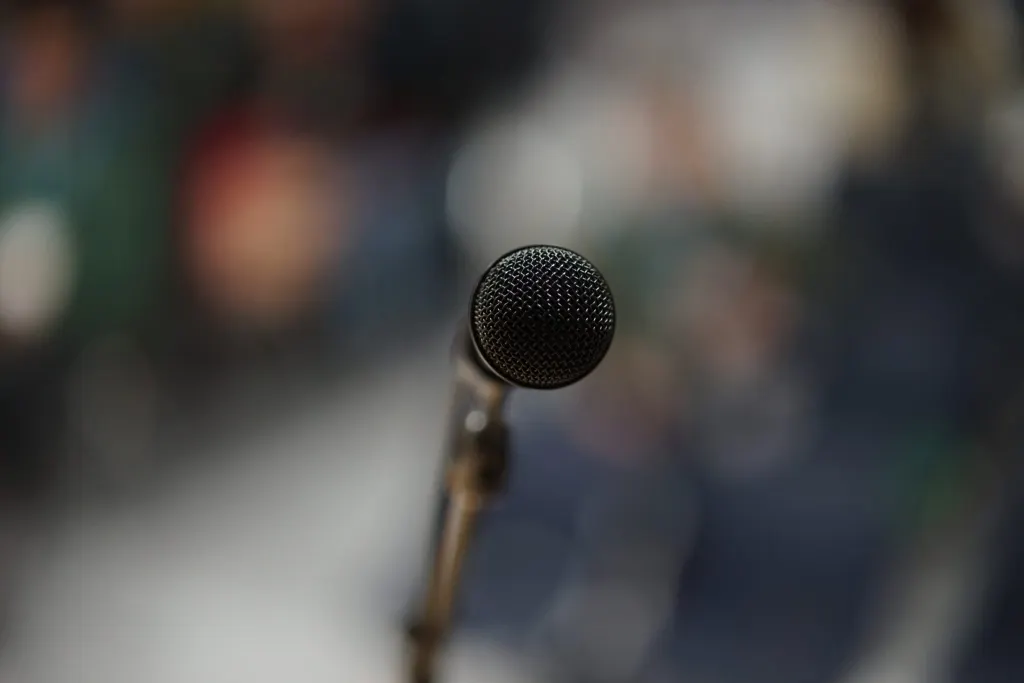
- Sound first.eSpeakers calls audio quality very important. Ask for the venue's audio, and listen to it before the edit begins.
- Captions.eSpeakers' guide notes that many reels play on silent autoplay, in social feeds and emails. Captions carry your words when the sound is off.
- Music under the voice. The same guide names music mixed louder than the speaking as one of the most common and damaging errors.
- Plain editing. SPEAKING.com warns against heavy graphics, sound effects and trick edits that make a reel look like a commercial.
The sources split on music. BigSpeak recommends background music in a reel, while the Baltimore bureau wants its demo with none. Keep music light in the reel and leave it out of the demo.
Two Endings, Two Versions
Export the reel twice. Only the last few seconds differ:
For planners and your website
End on your name, your topics and a way to book you, such as your website or email.
For speakers bureaus
No website, phone number or email anywhere in the video. eSpeakers calls this “bureau-friendly”, and SPEAKING.com suggests a closing line that sends viewers to their speakers bureau for booking.
Then put each version where it will be seen:
- Near the top of your speaker page, above your list of topics.
- In replies to planners who ask about your style, as a link rather than an attachment.
- In bureau applications and on bureau profiles, using the bureau version only.
- On booking platforms: eSpeakers recommends 3 to 5 clips of 2 to 4 minutes each on a profile.
- On YouTube, with a title that names you and your topic, so it can be found by name.
Three Public Reels to Watch
When we searched Google for “speaker reel” on November 22, 2026, videos came first. These three are public on YouTube, and none is Ruah's work. We looked at frames from each (at 1, 4, 10 and 25 seconds, the middle and the last seconds) on November 22, 2026, against the checks above:
- Speaker Reel | Afdhel Aziz
Speakers Spotlight, a speakers bureau · 1 minute 48 seconds · posted September 13, 2024
It opens on the bureau's logo, his name and archival news footage, and he is presenting with a clicker in hand by 25 seconds. A one-line testimonial card from the American Society of Association Executives sits mid-reel, and it ends on the bureau's contact details, not his: a bureau version.
- Robin Hauser - Sizzle Reel
BigSpeak Speakers Bureau · 2 minutes 13 seconds · posted May 16, 2022
It opens on a montage and the bureau's logo, shows her name at 10 seconds and her presenting with a headset microphone by 25 seconds, and ends on BigSpeak's logo: another bureau version, inside the 2 to 3 minutes BigSpeak recommends.
- Nora Osman Speaker Sizzle Reel Longer
Nora Osman's own YouTube channel · 1 minute 26 seconds · posted January 2, 2026
It opens on animated text. At 10 seconds she is on stage with the room in shot from behind the seats, a hand raised in the audience. It ends on her website, email and LinkedIn: the version for planners she contacts directly.
At the first second, none of the three shows the speaker on stage, which is where eSpeakers advises a main clip to begin. Watch for how much of each reel is stage footage, whether you can see the room, and which version its ending is.
8 Mistakes That Cost Bookings
- No stage footage: only interviews and client testimonials.
- A long opening about your credentials before anyone sees you speak.
- Sound recorded by a camera at the back of the room.
- Music mixed louder than your voice.
- Footage so old that you no longer look or sound like it.
- Your website and phone number on the version you send a bureau.
- A staged audience presented as a real event.
- No captions, so the reel says nothing on mute.
Mistakes 1, 3 and 5 are settled at the event, not in the edit: the stage footage, the sound and how recent the talk is. That is why the filming checklist above comes first.
Keep It Current
eSpeakers' guide suggests refreshing a reel every 12 to 18 months, or sooner when you film a stronger talk. Premiere Speakers Bureau's CEO, interviewed by The Speaker Lab, suggests replacing one or two clips at a time as needed.
The simplest habit is to record every talk. Each new event adds clips to choose from, and next year's reel is already half filmed.
Where Ruah Fits
You bring the message and the stage. We bring the camera work and the edit:
- A talk still to be filmed. Our video production company in Elizabeth, NJ works with coaches, speakers and podcasters with a message, and our crew films on site.
- Footage you already have. Video editing services shape talks and keynotes into long videos and short clips.
- Faith-led speakers and coaches. The Full Breath Partnership turns talks, podcasts and livestreams into focused clips and excerpts.
- Your story, not just your stage. Our brand video guide covers the interview film that tells people why you do this work.
Our plans and prices are on the pricing page. We work out what your footage needs on a free call first.
Sources
The figures and advice above come from these pages, read on November 22, 2026.
- International Association of Speakers Bureaus: Resources for Speakers, FAQBureaus prefer two videos: a 2 to 3 minute reel of the speaker presenting to an audience, which may include audience testimonials, and a demo of 10 minutes or more of one presentation. Lighting and sound should be good quality.
- eSpeakers help center: What Kind of Video Clips Are Effective? (updated August 18, 2026)The primary clip should start with the speaker on stage; mixed videos work when at least 60% is on-stage footage; angles that include some of the audience are preferable; use sound from the house audio system; buyers watch only the first 2 to 3 minutes of a clip; 3 to 5 clips of 2 to 4 minutes each; widescreen HD is the current standard.
- eSpeakers help center: How Do I Add Video Clips to My Profile (updated August 18, 2026)Profile videos should be bureau-friendly, with no websites, phone numbers or email addresses.
- eSpeakers: How to Create a Speaker Reel That Books You More Paid Events (Joe Heaps, April 12, 2026)Primary reel 90 seconds to 2 minutes, extended reel 3 to 5 minutes; content clips 10 to 20 seconds at most; reaction footage every 20 to 30 seconds; captions, because many reels play on silent autoplay; music louder than the speaking is a common error; refresh every 12 to 18 months.
- SPEAKING.com: How to Create the Best Speaker Demo Video (May 17, 2019)At least 2 consecutive minutes of speaking before an audience; credentials, testimonials, books and media for 30 to 60 seconds at most; most event planners watch only the first few minutes; most bureaus do not want contact details, so keep two versions; avoid flashy graphics, sound effects and gimmicky editing; err on the light side.
- BigSpeak Speakers Bureau: What All Keynote Speakers Should Have in Their Demo ReelsA reel of 2 to 3 minutes; open with an introduction; short clips of key points; audience reactions, with applause at the end; one-sentence testimonials between clips; background music.
- The Baltimore Worldwide Speakers Bureau: speaker submission guidelinesRequires a 5 to 10 minute video, unedited and without voiceovers, music or transition pages, of a talk to a live paid audience in the past year; accepts a produced speaker reel of 2 to 10 minutes as an extra link; does not accept media interviews, studio or home recordings, book signings or panels.
- BizBash: 5 Tips for Vetting a Keynote Speaker's True Talent (Jon Picoult, September 3, 2025)Look for a company or association name on the stage to confirm the footage is from a real event; view unedited clips at least a couple of minutes long; some production companies stage events with fake audiences.
- NSA Illinois: What Do Event Planners and Bureaus Look For in a Speaker?A bureau owner and a corporate planner advised a short demo of about 3 minutes and a keynote excerpt of about 20 minutes; a poor video hurts because it is often the only evidence a decision maker has.
- The Speaker Lab: 3 Tips to Make Your Demo Video Pop, with Shawn Hanks of Premiere Speakers Bureau (October 19, 2023)Event planners often look at several speakers and have little time for long videos; a single demo video of 3 to 5 minutes; replace 1 or 2 clips as needed.
- Speaker Insight: What Makes a Good Speaker Showreel? (July 9, 2020)Gain video and photo rights in your speaker contract or have the organizers sign a waiver; get the recording from the microphone through the event's AV team.
- Pibworth: Effective Speaker Sizzle ReelsOwn the rights to everything in the reel, including audience waivers and media releases for testimonials.
Frequently Asked Questions
What is a speaker reel?
It is a short video, usually 2 to 3 minutes, that shows you speaking to a real audience so an event planner or a speakers bureau can judge your style before booking you. The International Association of Speakers Bureaus says bureaus also like a second, longer video of one presentation, 10 minutes or more.
How long should a speaker reel be?
The figure that more of the pages we read agree on than any other is 2 to 3 minutes, among them the International Association of Speakers Bureaus and BigSpeak. eSpeakers puts the main reel at 90 seconds to 2 minutes, and a bureau CEO interviewed by The Speaker Lab puts a single video at 3 to 5 minutes. SPEAKING.com notes that most planners watch only the first few minutes, so your strongest stage footage belongs at the start.
Is a demo video the same as a speaker reel?
No. The reel is the edited highlight. The demo is a long stretch of one talk, so a planner can judge your delivery over many minutes, not just your best lines. A bureau may want it unedited: the Baltimore Worldwide Speakers Bureau requires 5 to 10 minutes of a talk given to a live paid audience in the past year, without voiceovers, music or transition pages.
Can I make a speaker reel without event footage?
Not one that does its job. A reel exists to show you in front of real listeners, and planners are advised to check that the event was real. Film your next talk with the organizer's permission and the venue's sound. A studio interview can add a testimonial or explain your topic, but it cannot stand in for an audience.
Should my phone number and website be on the reel?
Make two versions. The one you send to planners directly can end with your website and a way to book you. The one for bureaus should carry no contact details at all, because SPEAKING.com says most bureaus will not want them, and eSpeakers requires profile videos without them.
How often should I update my speaker reel?
eSpeakers suggests a refresh every 12 to 18 months, or sooner when you film a stronger talk. A bureau CEO interviewed by The Speaker Lab suggests replacing one or two clips at a time as needed.
Ruah Creative House is a purpose-driven creative studio at 30 Union St. Suite 7 in Elizabeth, New Jersey. Eric Muñoz Jr., our founder, was born and raised in Elizabeth, still lives here, and has served the city for years through its schools, nonprofits, churches, and Chamber of Commerce.
See who we film for and how a project runs on our video production company page.